


点击右上角
分享给朋友吧
How Will Agentic AI Change Your Print Business?
Author:Kylin machine company
Click:
Time:2026-03-23 11:31:50
Are you tired of the endless, manual task of processing print jobs from emails? This tedious process is not only slow but also prone to errors, eating up valuable time your team could be spending on revenue-generating work.
Agentic AI, like the new Fiery Scribe, is here to solve that problem. It automatically reads your email job requests, extracts the necessary files and settings, and prepares them for printing. This technology saves time, reduces costly mistakes, and frees your team to focus on producing top-quality print products.
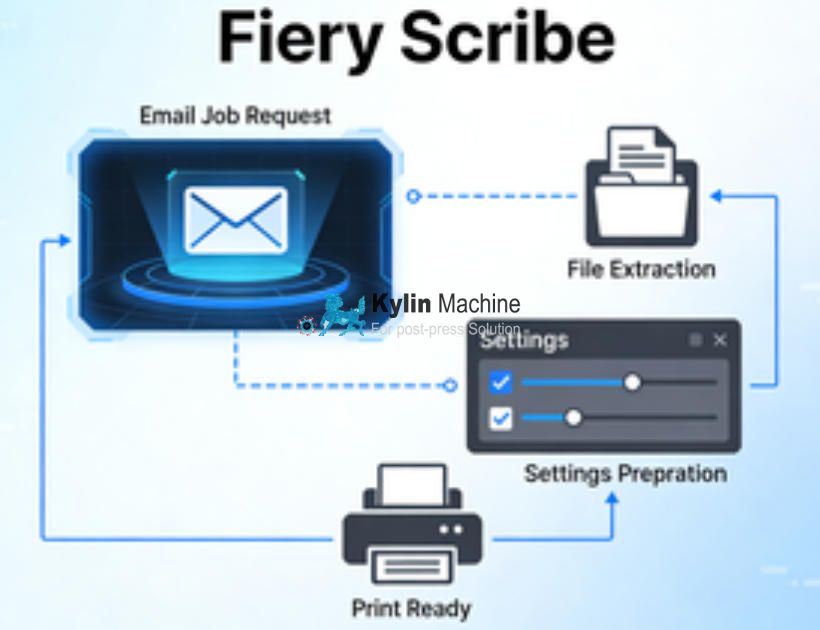
This new AI sounds promising, but how does it really affect a business like yours? It’s more than just a fancy new tool; it represents a shift in how we can think about workflow automation. Let’s explore how this technology fits into the bigger picture of print production and where the real value lies for your shop.
Can AI Really Automate My Entire Prepress Workflow?
Do you feel like you’re drowning in prepress tasks? Manually setting up every single job is not only slow but also carries the risk of human error. What if you could automate the most time-consuming parts of this process and ensure accuracy every time?
While a completely “lights-out” automated workflow is still on the horizon, agentic AI takes a huge bite out of manual prepress work. It tackles the job intake process, a major bottleneck for many print providers, by automatically analyzing emails to pull out job specifications and files.
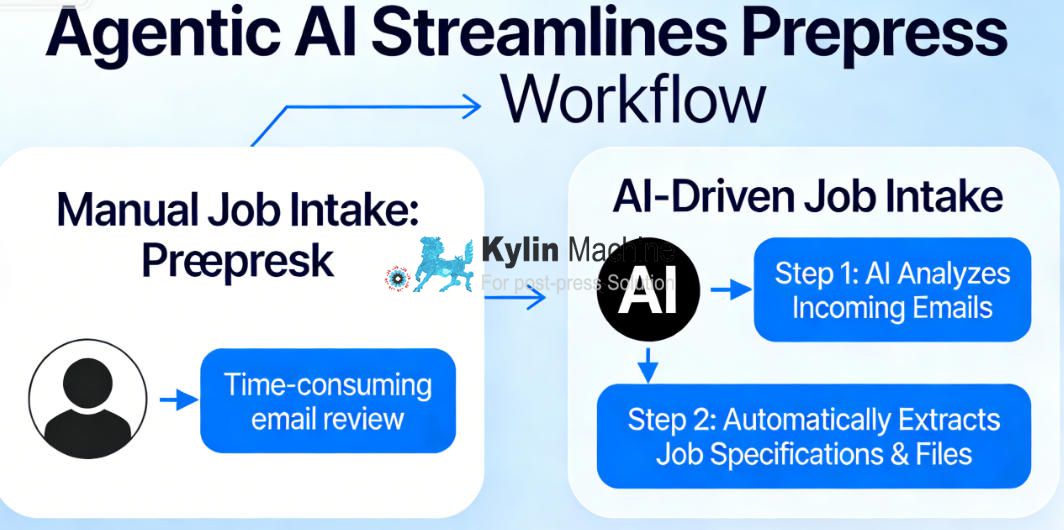
Let me break down what “agentic AI” really means. Think of it as a digital assistant that doesn’t just follow a script but can understand instructions and act on them independently to achieve a goal. It’s a game-changer for handling the flood of email job requests.
Here’s a simple comparison of the old way versus the new way:
| Manual Email Processing | AI-Powered Processing |
|---|---|
| 1. Manually open and read each email. | 1. AI monitors the inbox automatically. |
| 2. Decipher the customer’s requirements. | 2. AI analyzes the email content for specs. |
| 3. Download attached files. | 3. AI downloads files and links them to the job. |
| 4. Manually create a new job in the system. | 4. AI creates the job in Fiery Command WorkStation. |
| 5. Copy and paste job settings. | 5. AI applies the correct settings. |
| 6. Hope you didn’t miss anything. | 6. The job is ready to go, error-free. |
This automation is fantastic for the digital side of things. But once the job is in your system, you still need to produce it physically. This is where the efficiency can either continue or come to a grinding halt. After the AI prepares the job, you need a reliable machine to create the final product. Whether it’s a luxury rigid box or a durable hardcover book, the quality of your machinery is what brings the job to life. Our fully automatic rigid box machines are the perfect next step after the digital prepress is done.
Is This AI Just for Big Companies with Huge Budgets?
Are you worried that the latest AI technology is out of reach for your business? It’s a common misconception that only large corporations can afford these kinds of advanced solutions. But what if this technology was more accessible than you imagined?
Not at all. In fact, solutions like Fiery Scribe are specifically designed as an easy entry point for print providers of all sizes. The main goal is to provide a quick return on investment by saving hours of manual labor each month, which is a massive benefit for smaller shops.
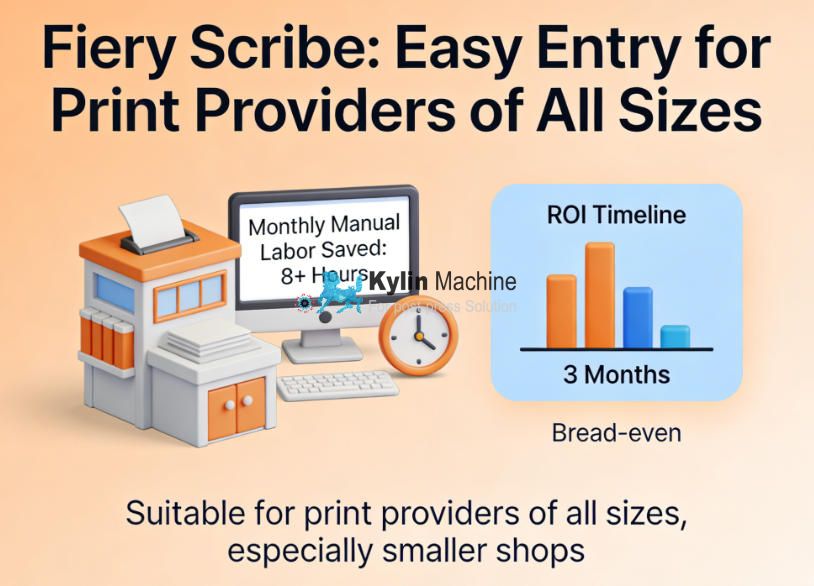
Let’s talk about the return on investment (ROI). Fiery calculated that for a shop handling about 20 email jobs a day, their AI could save 10 hours of work per month. Think about what you could do with an extra 10 hours. That’s more time for finding new customers, training your team, or simply getting more jobs out the door.
I remember talking to a client a few years ago who was struggling with this exact problem. He was the owner of a small but growing box-making business. He spent most of his mornings just sorting through emails and setting up jobs. He felt like he was stuck in an administrative role instead of running his business.
Investing in automation is about buying back your time. While software like Fiery Scribe is a great start, the same principle applies to your production hardware. An investment in an automated machine provides a similar, complementary ROI. For example, our auto hard cover machine drastically reduces the time it takes to create high-quality book covers. An efficient workflow isn’t just about software; it’s about the entire production line working together seamlessly.
What’s the Next Step After Automating Job Submission?
So, you’ve automated your email intake and freed up hours of prepress time. What’s next? Is that the end of the line for automation, or is it just the beginning of a more efficient and profitable future for your business?
Automating job submission is a fantastic first step, but it’s just that—a first step. The next logical move is to look at your entire production process. You need to examine how a job moves from a digital file to a finished, physical product and identify where you can gain even more speed and efficiency.
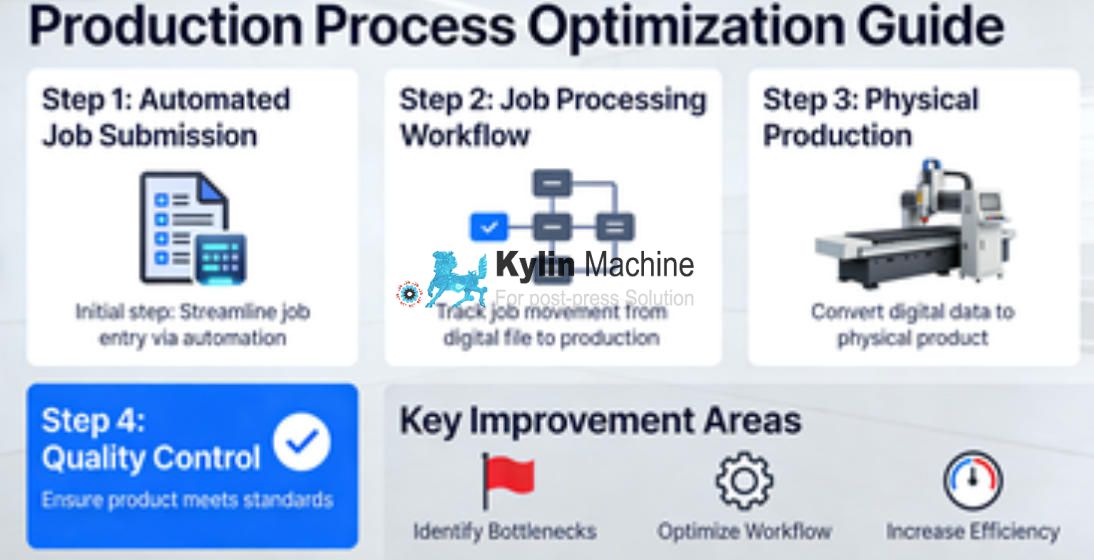
This is where we at Kylin Machine can really help. An AI can get the job ready, but you need powerful and reliable hardware to produce it. We specialize in the post-press machines that form the backbone of your production. Our high-tech solutions, like the Robotic Spotter used in our rigid box lines, ensure that the precision and efficiency gained from the AI aren’t lost during manufacturing.
I once visited a customer who had the latest workflow software but was still using old, semi-manual machines for production. They were creating a bottleneck for themselves. The jobs were ready to go in minutes, but then they would sit in a queue waiting for the machines to be slowly set up for each new job.
After they invested in one of our fully auto rigid box machines, the change was incredible. The machine could take the digital job data and be ready for production with minimal setup time. Their overall output doubled in a matter of weeks. It’s not just about one piece of technology; it’s about creating an integrated system where software and hardware work together. From making rigid boxes to casing in a hardcover book, the right machinery makes all the difference.
Recommended article
—

Recommended Products
—
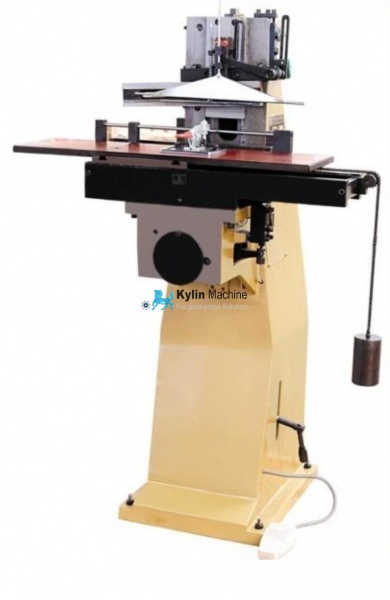
Book index machine
index paper die cutting machine is a special equipment for paper angle cutting in the printing industry
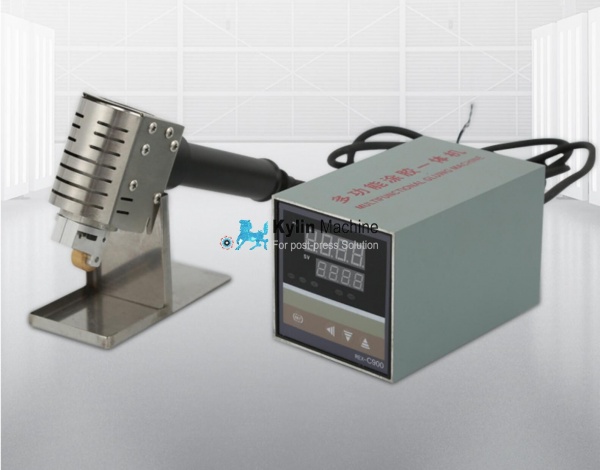
Mini handheld hot glue machine

Layflat board book binding machine
Children’s Board Book Production with PVA Pattern Gluing machine, kid puzzle board book glue binding machine. Animated Children’s Books, Interactive Books.

Rigid collapsible box machine
collapsible box side wing forming machine is a new type of equipment that is economical, practical, and widely used in the manufacturing of gift boxes, primarily for the folding and wrapping of the side panels of the boxes
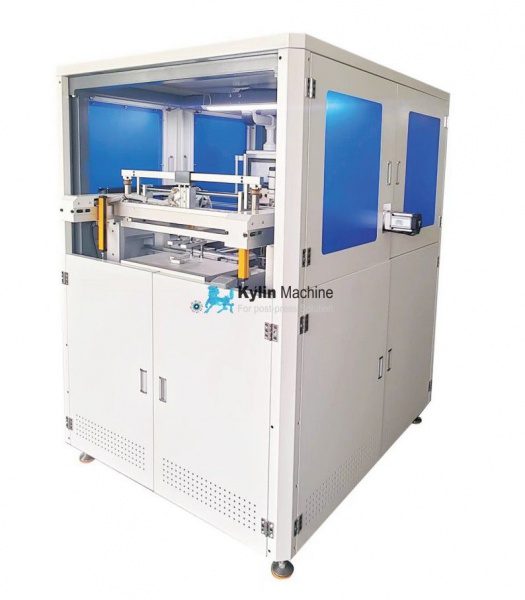
Perfume box making machine
perfume box forming machine adopts a fully disassembled action mode to achieve the automatic forming of perfume box, drawer boxes, slipcase, wine box, etc.

2023 Hard cover book pressing and creasing machine
Hard cover book pressing and creasing machine is a piece of equipment used in the bookbinding process to create professional-looking hardcover books
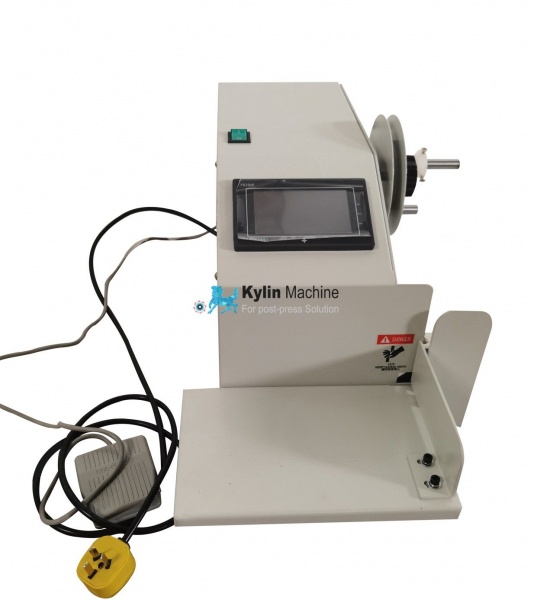
Small head tail band machine
A head tail band machine is a semi-automatic machine that is used to apply head and tail bands to hardcover books. Head and tail bands are decorative strips of cloth or paper that are applied to the top and bottom of the spine of a book. They help to protect the spine and give the book a more finished look.
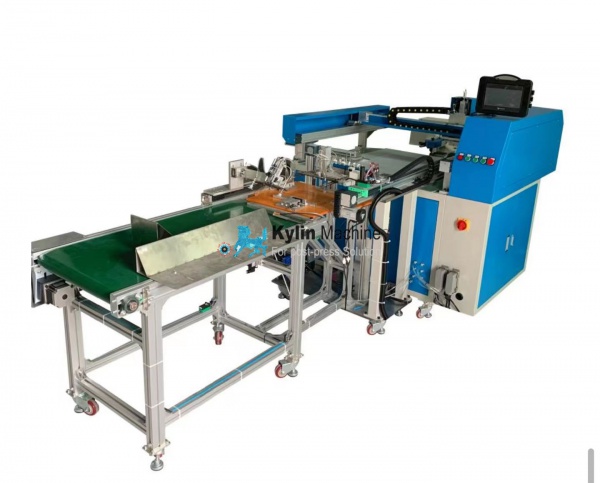
Auto notebook cover making machine Ky-1700
Auto notebook cover machine is used for leather products, including notebook, diary, shoes, bags, gift boxes, jewelry boxes, and ipad/phone cases
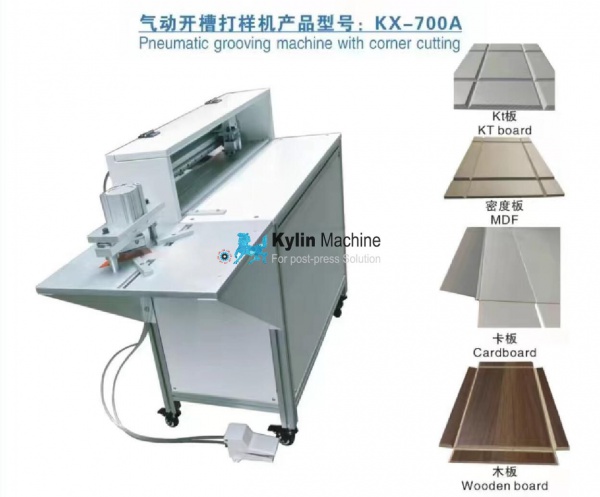
Manual groove machine with corner cutter
A manual groove machine with corner cutter is a device used in paper and cardboard processing to create grooves and corners on sheets of paper or cardboard
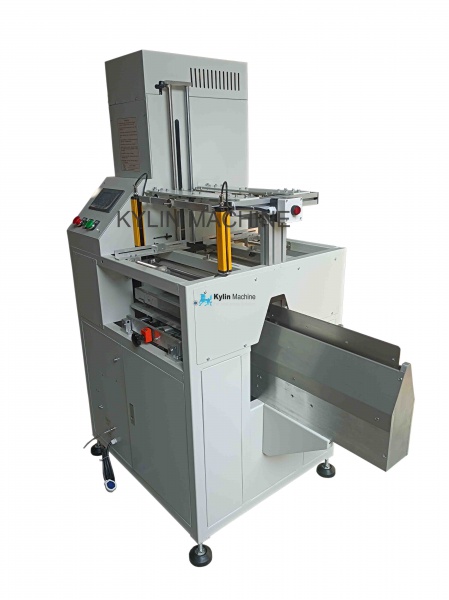
Book casing machine 2023
The equipment can be operated by one to two people. The operator only needs to place the book core and cover
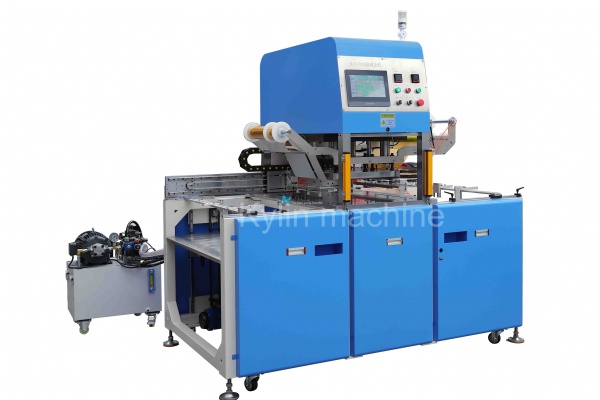
Auto Hydraulic Force Stamping machine
Max Stamp size: 550X450mm Stamping precision: ±0.1mm Pressure power: 10T Overlay the stamped logo
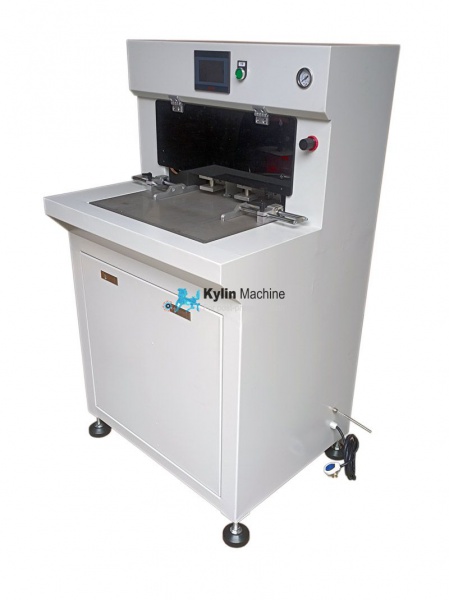
Hardcover rounding machine
Bookcase cover rounding machine press the produced corner bookcase into rounded corners without cutting the material directly install the bookcase, and press the right-angle edge material into the bookcase cover
Recommended Machines
—
Book index machine
index paper die cutting machine is a special equipment for paper angle cutting in the printing industry
Mini handheld hot glue machine
Layflat board book binding machine
Children’s Board Book Production with PVA Pattern Gluing machine, kid puzzle board book glue binding machine. Animated Children’s Books, Interactive Books.
Rigid collapsible box machine
collapsible box side wing forming machine is a new type of equipment that is economical, practical, and widely used in the manufacturing of gift boxes, primarily for the folding and wrapping of the side panels of the boxes
Perfume box making machine
perfume box forming machine adopts a fully disassembled action mode to achieve the automatic forming of perfume box, drawer boxes, slipcase, wine box, etc.
2023 Hard cover book pressing and creasing machine
Hard cover book pressing and creasing machine is a piece of equipment used in the bookbinding process to create professional-looking hardcover books
Small head tail band machine
A head tail band machine is a semi-automatic machine that is used to apply head and tail bands to hardcover books. Head and tail bands are decorative strips of cloth or paper that are applied to the top and bottom of the spine of a book. They help to protect the spine and give the book a more finished look.
Auto notebook cover making machine Ky-1700
Auto notebook cover machine is used for leather products, including notebook, diary, shoes, bags, gift boxes, jewelry boxes, and ipad/phone cases
Manual groove machine with corner cutter
A manual groove machine with corner cutter is a device used in paper and cardboard processing to create grooves and corners on sheets of paper or cardboard
Book casing machine 2023
The equipment can be operated by one to two people. The operator only needs to place the book core and cover
Auto Hydraulic Force Stamping machine
Max Stamp size: 550X450mm Stamping precision: ±0.1mm Pressure power: 10T Overlay the stamped logo
Hardcover rounding machine
Bookcase cover rounding machine press the produced corner bookcase into rounded corners without cutting the material directly install the bookcase, and press the right-angle edge material into the bookcase cover

2022 verion of rigid box machine
it is the most advance machinery for making phone box, tea box, sweet box, shoe box, jewelry box, moon cake box, ect

Glue spray machine
A glue spray machine is a device that is used to apply a thin, even layer of adhesive to a surface. This type of machine is commonly used in the packaging and printing industries to help secure boxes, labels, and other items in place. With its precision spray nozzle, a glue spray machine can quickly and easily apply glue to a variety of materials, including cardboard, paper, and plastic. This can help businesses save time and improve the efficiency of their packaging processes.

Cardboard slitting machine
Cardboard cutting machine is good at cutting bookboards, cardboard paper board. Simple Operation, flexible adjustment, high accuracy and efficiency

Book spine rounding and backing machine
Put the glued book block in the working table, place the book with its back facing in and parallel to the top of the table or slightly beyond the top. After several reciprocating movements of the round series, turn the book block over and re-Repeat the above operation method to make the back of the book form a complete arc
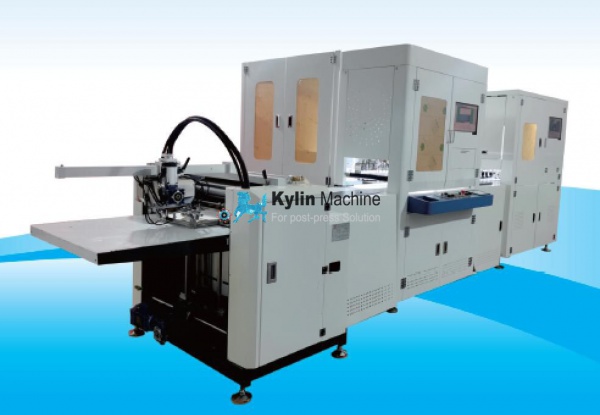
Fully Auto hard cover machine 2022 version
Fully Auto hard cover machine 2022 version

Paper round box making machine 2022 Version
paper round box making machine, not only make the round shape box, but also the irregular shape box with difference shape of molds.
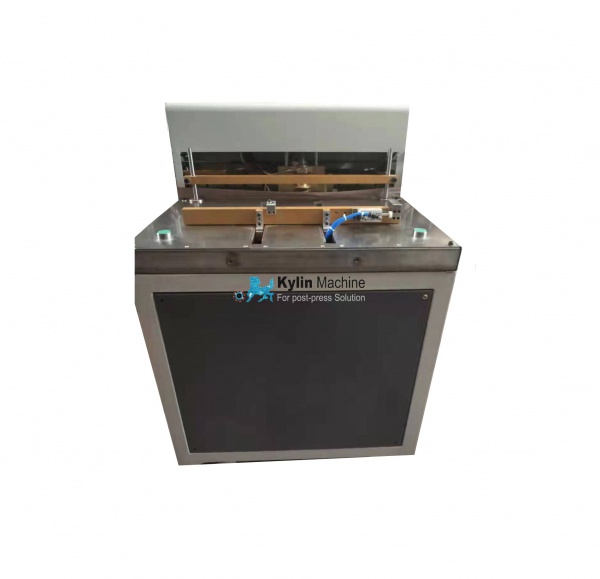
Jewelery box edge gilding machine
Stamp the lines on the jewelry box edge, with 5-8 box feed at one time. your best choice for jewelry box maker
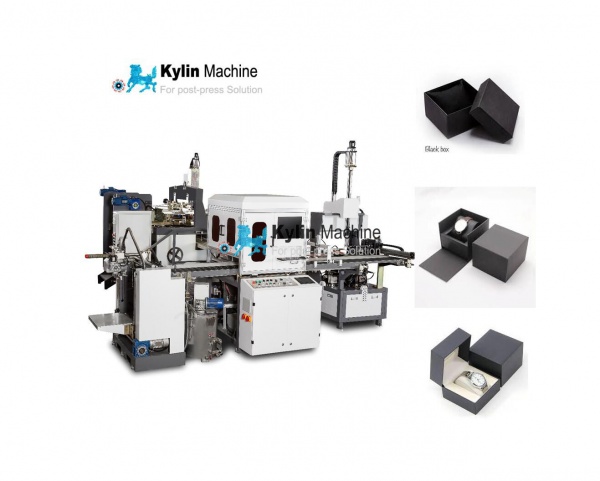
Automatic watch box making machine

Auto hot stamp and thumb cutter
This auto stampingand auto thumb cutter is used to hot foil AFTER the box lid is folded up - finished, and auto cut the thumb of boxes

Robbin machine
Ribbon pasting machine is used high technology to pasting the ribbon on the cover of rigid boxes, jewelry box, luxury package box. auto pasted with double side adhesive tape on the ready ribbon materials, then auto pasting on the cover of box.

Jewellery Box making machine
Jewelry box machine is designed for making high quality box in Curve corner shape, Octagon shape, Square shape box and other special shape withplastic, MDF, cardboard and others materials.
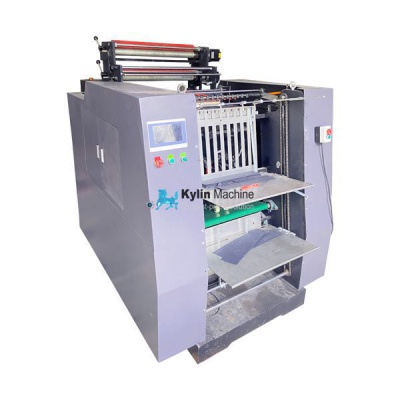
Auto feed die cutting&stamping machine
Auto feeder die cutting&stamping machine, working for 60-3,000gsm paper sheets, cardboards, leather, tissue paper, hard cover, film materials.
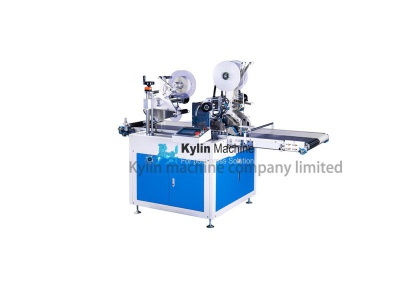
Double-side adhesive tape applicator for foldable box
Double-side adhesive tape applicator for foldable box
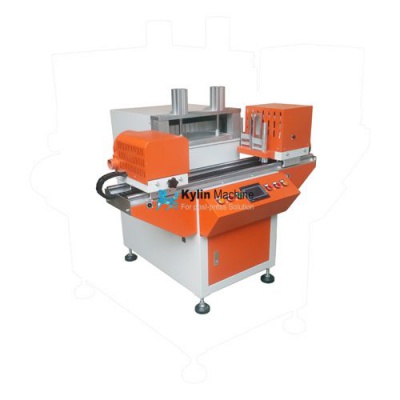
Book edge gilding machine 2021 version
Book edge gilding machine is used for edge gilding of Notebook, Bible book, normal book ,etc, round corner gilding, simple process. esay operated, sanding process and gilding process are all in one machines
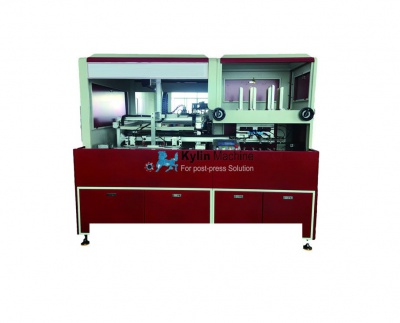
Collapsible boxes machine
The Foldable rigid boxes collapsible gift boxes machine, the box could be foldable while in shipping, save shipping costs and storage costs, it also be called collapsible gift boxes.

Slip Case making machine
We are pleased to introduce our Ky-280 Slipcase making machine. This machine can wrap top piece of the box . It can also make book slip cases. Without sealing the corner of the boards, the board glued with cover can be formed into a slip case with the hi
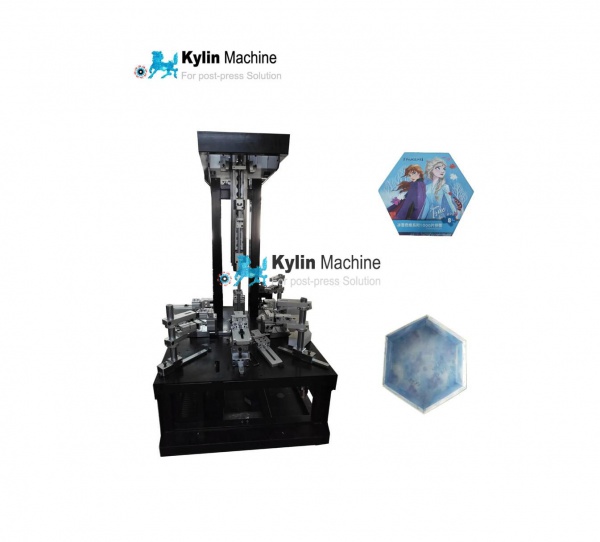
Polygonal box machine
Polygonal rigid box machines, which can customized your rigid boxes business. Triangle shape box, Rectangle shape rigid box, Pentagon shape rigid box, hexagon shape rigid boxes, Octagon shape rigid box, all availabe for making.

Charpie insert machine
Charpie insert machine, foam covered with charpie, no only protect the goods in the boxes, but also decorate the cover of boxes
ADDRESS
haoxin industy, Daojiao town, Dongguan city, China
CONTACT
Ph:+86-13925787347
Mail:admin#iboxmachine.com
点击右上角
分享给朋友吧
NEWSLETTER

