


点击右上角
分享给朋友吧
Why Is the Heidelberg Speedmaster CX 104 a Bestseller for Packaging Printers?
Author:Kylin machine company
Click:
Time:2025-09-09 09:32:32
Running a print shop is tough. You face pressure for speed, quality, and short runs. Old machines just can’t keep up with modern demands, hurting your bottom line.
The Speedmaster CX 104 is a bestseller because it’s a true all-rounder. It combines high speed for long jobs with fast, automated changeovers for short runs. This versatility makes it the perfect workhorse for today’s demanding packaging market, solving multiple problems with one machine.
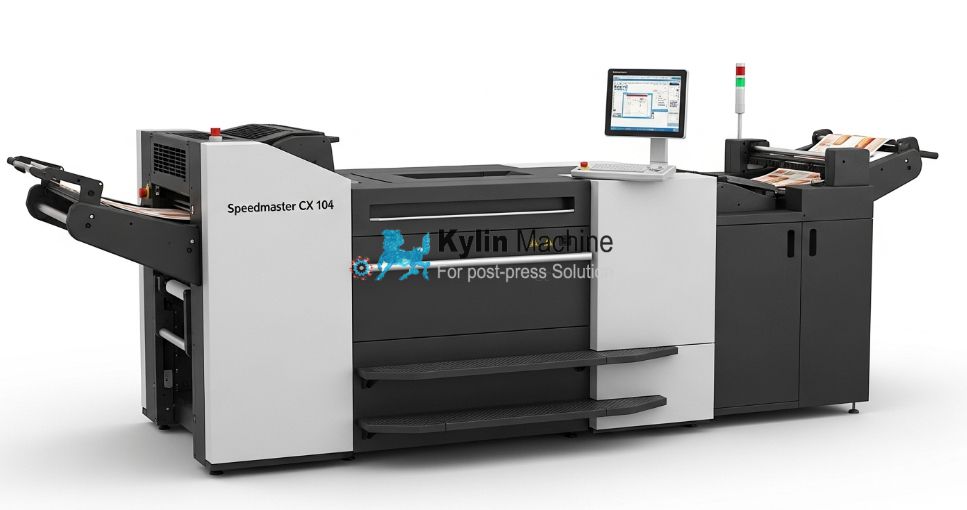
These features sound great on paper. But I always want to see how a machine performs in the real world. Let’s look at four companies from a recent Heidelberg report. Their stories show exactly how this press solves real problems. It’s interesting for me because we see the same challenges in the post-press world.
How Can You Master Short-Run Packaging Jobs Profitably?
Small orders are becoming more common. But frequent job changes can destroy your profits. A Dutch company, Acket Drukkerij Kartonnage, found a way to turn this problem into an advantage.
They master short runs by using the CX 104’s “Push to Stop” automation. This feature drastically cuts down setup times between jobs. It allows them to print many different small orders in one shift, making short-run work very profitable and reducing waste.
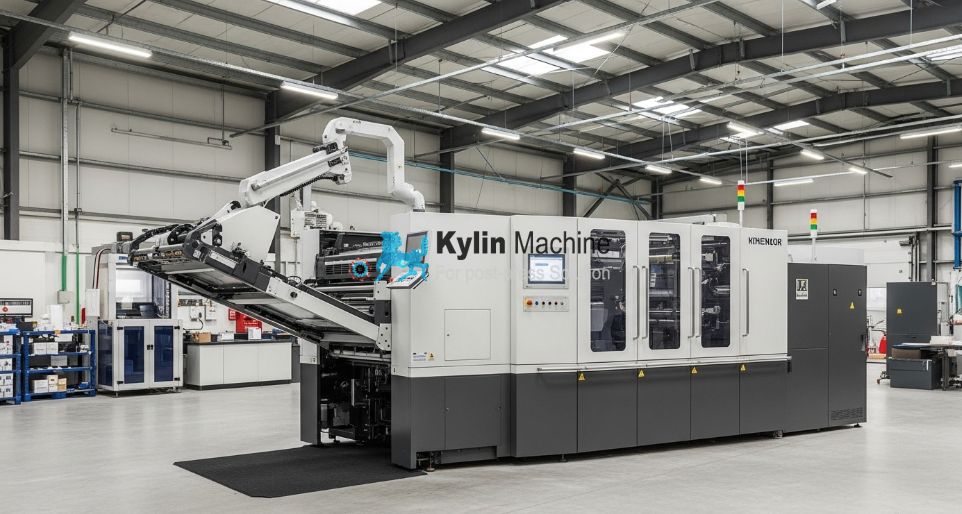
For years, the biggest headache in printing was the short run. The setup, or “makeready,” took a long time. You had to change plates, adjust ink, and run test sheets. If a job only took 20 minutes to print but an hour to set up, you were losing money. This is a challenge I see in my own industry with post-press finishing. Quick changeovers are critical. Many of our customers at Kylin Machine now handle smaller, more customized orders for rigid boxes. They can’t afford long downtimes between different box sizes or styles. That’s why we’ve invested so much in automating our machines. The core problem is the same: making sure the machine is producing, not just being prepared for the next job.
How Technology Changes the Game
Heidelberg’s “Push to Stop” concept flips this around. The machine handles the job changeover process almost by itself. The operator just confirms the next job, and the press automates the plate changes, wash-ups, and presets. This turns a long manual process into a quick, guided one, making the operator more of a process manager.
| Traditional Makeready Process | “Push to Stop” Automated Process |
|---|---|
| Manual plate loading | Fully automatic plate changes |
| Multiple test prints for color | Smart presets reduce waste sheets |
| Long downtime between jobs | Minimal, predictable downtime |
| High operator intervention | Operator oversees automation |
This shift means a company like Acket can stack up several small jobs and run them back-to-back with almost no interruption. Profitability is no longer tied to long, simple runs.
How Do You Meet the Demand for Luxury Packaging Finishes?
High-end brands demand unique packaging. Can your equipment handle special UV effects and coatings? Shinwa Factory in Japan faced this exact challenge for their cosmetic and spirits clients.
Shinwa Factory chose a Speedmaster CX 104 with integrated UV technology. This allows them to apply special coatings and effects in-line during the printing process. It helps them produce stunning, high-value packaging efficiently and meet the high standards of luxury brands.
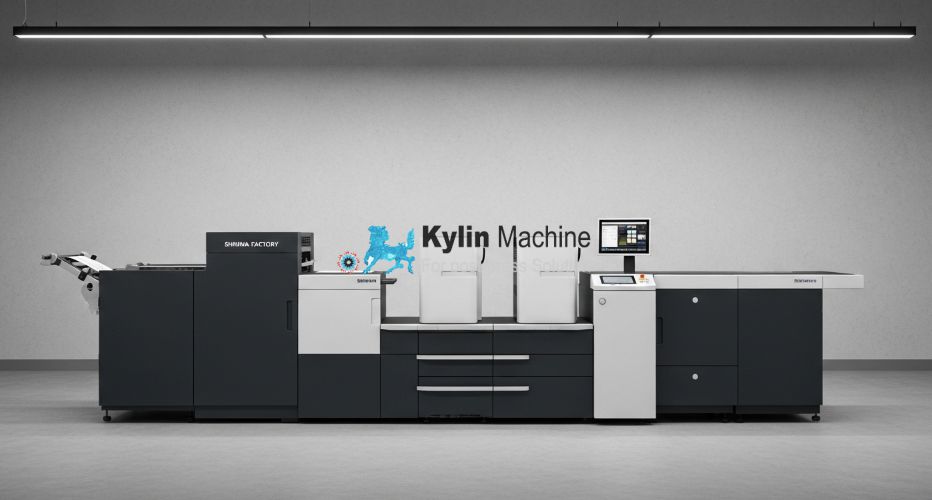
The luxury market is all about standing out on the shelf. A plain printed box is not enough. Brands want special textures, spot gloss, matte finishes, and other effects that catch a customer’s eye. In the past, achieving this meant a multi-step process. You would print the sheets on one machine, then move them to another for UV coating. This adds time, cost, and a risk of errors. I remember visiting a client who was struggling with this. Their two-step process for UV coating often led to small alignment mistakes. Seeing an integrated solution reminds me why we build our machines for precision. For a rigid box, the printed wrap has to be positioned perfectly on the board. There is no room for error.
The Power of In-Line Finishing
The CX 104 with UV technology brings this finishing step directly into the press. As the sheet moves through the machine, a dedicated unit applies the UV coating exactly where it’s needed before it’s cured instantly by UV lamps. This is a game-changer.
| Finishing Method | Key Benefit | Ideal For |
|---|---|---|
| Spot UV Gloss | Makes specific elements pop | Logos, product images |
| Matte Varnish | Gives a soft, premium feel | High-end electronics, cosmetics |
| Drip-Off Effect | Creates contrasting textures | Creative and artistic packaging |
This in-line process is not just faster. It also gives much better quality control. Since it all happens in one pass, there are no issues with registration between the print and the coating. This is how Shinwa Factory can deliver the perfection that luxury brands demand.
Can One Machine Really Outperform Two Older Ones?
Running multiple older machines is complex and costly. What if you could get more output with less equipment and fewer operators? A company in Poland, FP-Pack, took the leap.
Yes, it can. FP-Pack replaced two older presses with a single Speedmaster CX 104. Thanks to its high speed of 16,500 sheets per hour and extreme automation, the new machine delivered higher net output, simplifying their workflow and fueling their rapid growth.
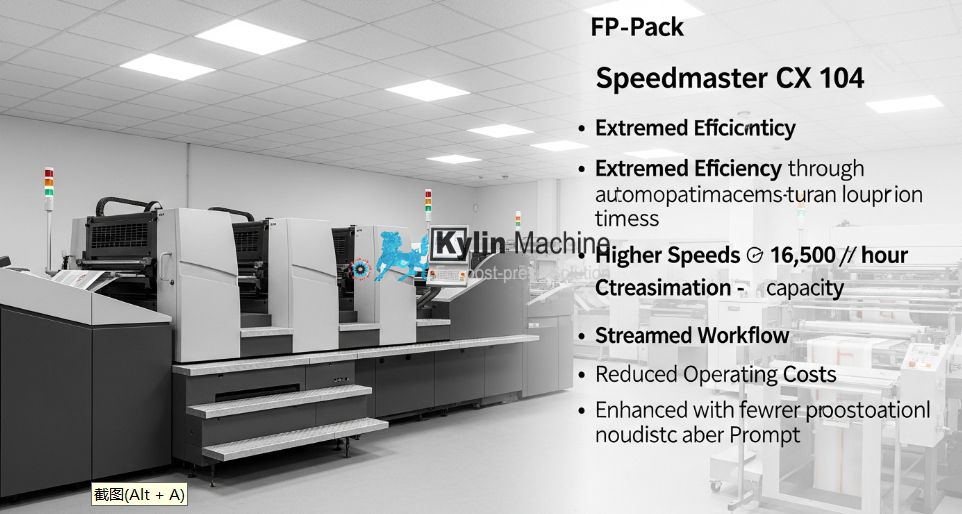
Many factory owners believe that more machines equal more output. But this is not always true. Older machinery comes with hidden costs. You have higher energy consumption, more maintenance downtime, and you need more operators to run everything. Plus, you need more floor space. We see this all the time in the rigid box industry. A customer might have two or three semi-automatic lines running. They think they are at full capacity. But one of our fully automatic rigid box makers, like the Kylin K-1200, can often produce more than all of those lines combined, and with just one or two operators. The real measure is total net output per shift, not the number of machines on the floor.
Calculating the Real Productivity Gains
The key is to look at the whole picture. The CX 104 isn’t just fast; its automation also means it spends more time printing and less time waiting. Let’s imagine a simple comparison for an 8-hour shift.
| Factor | 2 Older Presses | 1 New CX 104 |
|---|---|---|
| Top Speed (sheets/hr) | 10,000 each | 16,500 |
| Makeready Time (per job) | 45 minutes | 15 minutes |
| Number of Jobs (in a shift) | 4 jobs (2 per press) | 6 jobs |
| Total Makeready Time | 180 minutes | 90 minutes |
| Total Printing Time | 300 minutes | 390 minutes |
| Approx. Net Output | ~50,000 sheets | ~107,000 sheets |
As you can see, even with a lower theoretical top speed, the new machine’s efficiency results in much higher real-world output. For FP-Pack, this change meant they could take on more work without needing a bigger factory or a larger team.
What’s the Key to Success in High-Volume Food Packaging?
The food industry demands absolute consistency and reliability. Downtime is not an option when big contracts with restaurants and food brands are on the line. Southern Champion Tray in the USA needed a machine they could count on day in and day out.
For high-volume food packaging, the key is rock-solid reliability and consistent performance. Southern Champion Tray relies on the CX 104’s stability to run long jobs for hours without issues, ensuring they meet their deadlines for major clients.
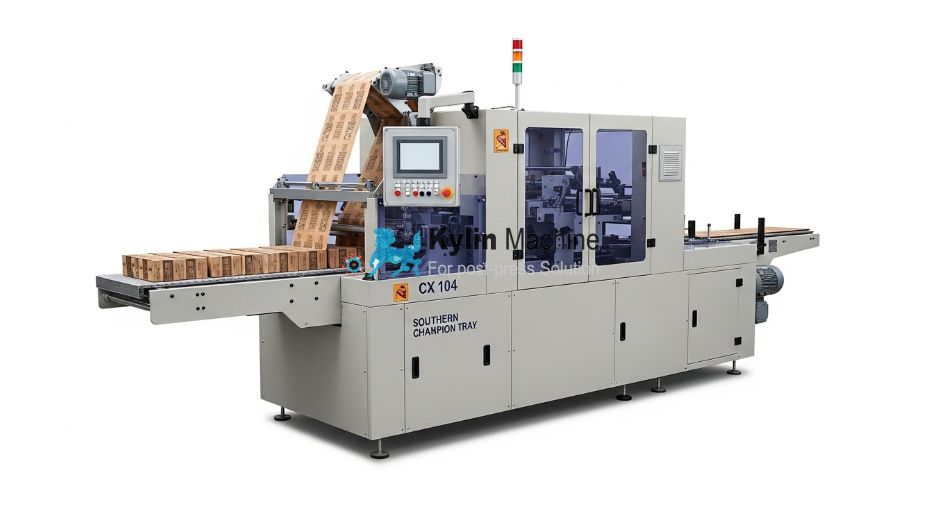
When you are producing millions of boxes for a fast-food chain, top speed is less important than stability. A machine that runs at 18,000 sheets per hour is useless if it has to be stopped every hour for adjustments. Consistency is everything. The color has to be the same on the first box and the millionth box. The quality must be perfect. In my 20 years in this business, I’ve learned that a machine is only as good as its weakest part. That’s why at Kylin Machine, we use top-grade components from trusted brands and focus on a strong, stable frame for our equipment. For our customers making millions of boxes, uptime is money.
Features That Guarantee Uptime and Quality
A machine built for long runs needs to be robust. It’s not about flashy features; it’s about solid engineering and smart systems that prevent problems before they happen. The CX 104 is built for this kind of industrial work.
| Reliability Factor | Description | Why It Matters for High Volume |
|---|---|---|
| Heavy-Duty Build | A solid, stable machine frame reduces vibration at high speeds. | Ensures consistent print quality over millions of impressions. |
| Automated Quality Control | In-line sensors constantly check for color and registration. | Catches errors instantly, reducing waste and preventing large-scale defects. |
| Predictive Maintenance | The machine’s software alerts operators to upcoming service needs. | Prevents unexpected breakdowns by allowing for planned maintenance. |
For a company like Southern Champion Tray, these features mean they can start a long job and trust the machine to deliver consistent, high-quality output for the entire run. That trust is the foundation of their business.
Conclusion
The Speedmaster CX 104 is a success because it adapts. It solves real-world problems for different types of printers, from short runs to luxury finishing, making it a truly versatile investment.
Recommended article
—

Recommended Products
—
Book index machine
index paper die cutting machine is a special equipment for paper angle cutting in the printing industry
Mini handheld hot glue machine

Layflat board book binding machine
Children’s Board Book Production with PVA Pattern Gluing machine, kid puzzle board book glue binding machine. Animated Children’s Books, Interactive Books.

Rigid collapsible box machine
collapsible box side wing forming machine is a new type of equipment that is economical, practical, and widely used in the manufacturing of gift boxes, primarily for the folding and wrapping of the side panels of the boxes
Perfume box making machine
perfume box forming machine adopts a fully disassembled action mode to achieve the automatic forming of perfume box, drawer boxes, slipcase, wine box, etc.

2023 Hard cover book pressing and creasing machine
Hard cover book pressing and creasing machine is a piece of equipment used in the bookbinding process to create professional-looking hardcover books
Small head tail band machine
A head tail band machine is a semi-automatic machine that is used to apply head and tail bands to hardcover books. Head and tail bands are decorative strips of cloth or paper that are applied to the top and bottom of the spine of a book. They help to protect the spine and give the book a more finished look.
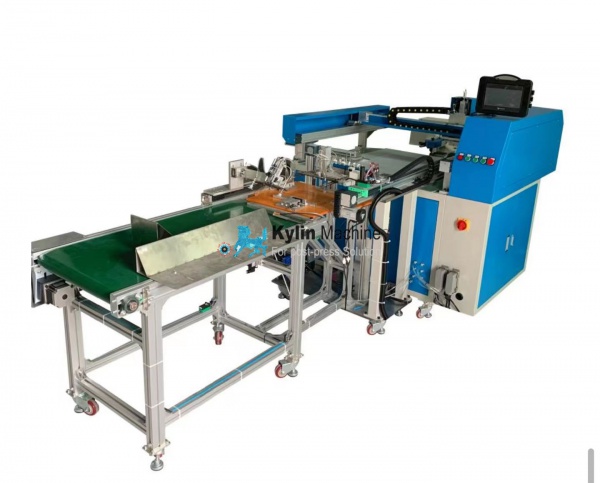
Auto notebook cover making machine Ky-1700
Auto notebook cover machine is used for leather products, including notebook, diary, shoes, bags, gift boxes, jewelry boxes, and ipad/phone cases
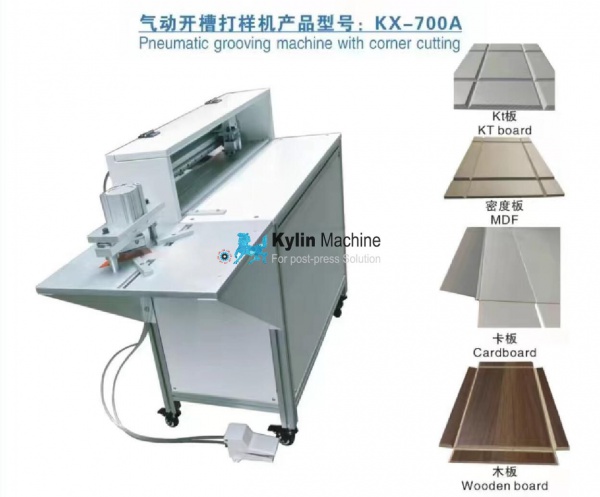
Manual groove machine with corner cutter
A manual groove machine with corner cutter is a device used in paper and cardboard processing to create grooves and corners on sheets of paper or cardboard
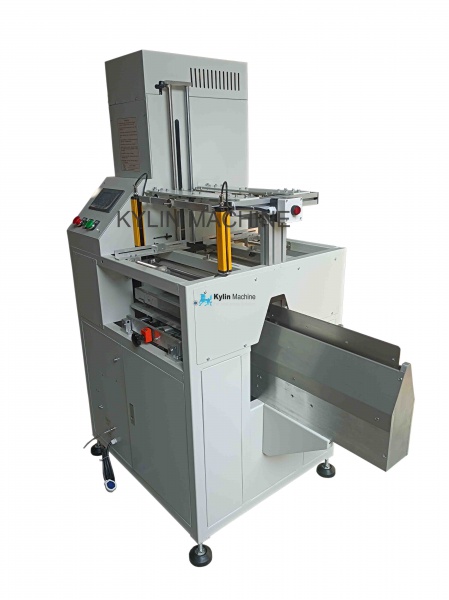
Book casing machine 2023
The equipment can be operated by one to two people. The operator only needs to place the book core and cover
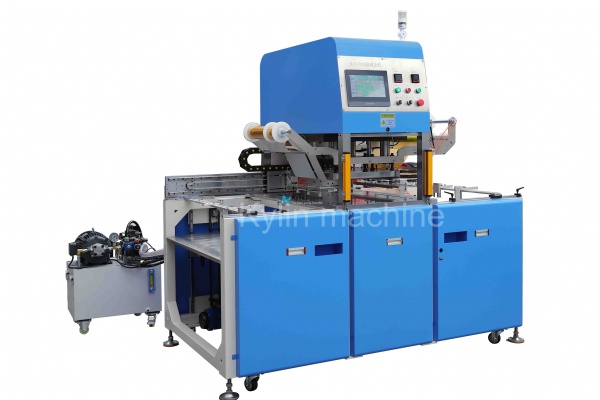
Auto Hydraulic Force Stamping machine
Max Stamp size: 550X450mm Stamping precision: ±0.1mm Pressure power: 10T Overlay the stamped logo
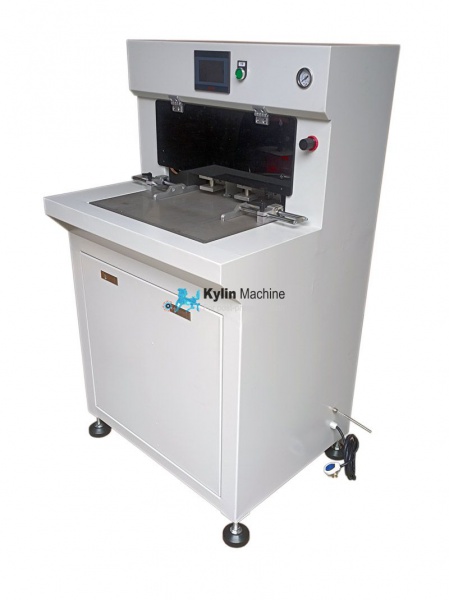
Hardcover rounding machine
Bookcase cover rounding machine press the produced corner bookcase into rounded corners without cutting the material directly install the bookcase, and press the right-angle edge material into the bookcase cover
Recommended Machines
—
Book index machine
index paper die cutting machine is a special equipment for paper angle cutting in the printing industry
Mini handheld hot glue machine
Layflat board book binding machine
Children’s Board Book Production with PVA Pattern Gluing machine, kid puzzle board book glue binding machine. Animated Children’s Books, Interactive Books.
Rigid collapsible box machine
collapsible box side wing forming machine is a new type of equipment that is economical, practical, and widely used in the manufacturing of gift boxes, primarily for the folding and wrapping of the side panels of the boxes
Perfume box making machine
perfume box forming machine adopts a fully disassembled action mode to achieve the automatic forming of perfume box, drawer boxes, slipcase, wine box, etc.
2023 Hard cover book pressing and creasing machine
Hard cover book pressing and creasing machine is a piece of equipment used in the bookbinding process to create professional-looking hardcover books
Small head tail band machine
A head tail band machine is a semi-automatic machine that is used to apply head and tail bands to hardcover books. Head and tail bands are decorative strips of cloth or paper that are applied to the top and bottom of the spine of a book. They help to protect the spine and give the book a more finished look.
Auto notebook cover making machine Ky-1700
Auto notebook cover machine is used for leather products, including notebook, diary, shoes, bags, gift boxes, jewelry boxes, and ipad/phone cases
Manual groove machine with corner cutter
A manual groove machine with corner cutter is a device used in paper and cardboard processing to create grooves and corners on sheets of paper or cardboard
Book casing machine 2023
The equipment can be operated by one to two people. The operator only needs to place the book core and cover
Auto Hydraulic Force Stamping machine
Max Stamp size: 550X450mm Stamping precision: ±0.1mm Pressure power: 10T Overlay the stamped logo
Hardcover rounding machine
Bookcase cover rounding machine press the produced corner bookcase into rounded corners without cutting the material directly install the bookcase, and press the right-angle edge material into the bookcase cover

2022 verion of rigid box machine
it is the most advance machinery for making phone box, tea box, sweet box, shoe box, jewelry box, moon cake box, ect

Glue spray machine
A glue spray machine is a device that is used to apply a thin, even layer of adhesive to a surface. This type of machine is commonly used in the packaging and printing industries to help secure boxes, labels, and other items in place. With its precision spray nozzle, a glue spray machine can quickly and easily apply glue to a variety of materials, including cardboard, paper, and plastic. This can help businesses save time and improve the efficiency of their packaging processes.

Cardboard slitting machine
Cardboard cutting machine is good at cutting bookboards, cardboard paper board. Simple Operation, flexible adjustment, high accuracy and efficiency

Book spine rounding and backing machine
Put the glued book block in the working table, place the book with its back facing in and parallel to the top of the table or slightly beyond the top. After several reciprocating movements of the round series, turn the book block over and re-Repeat the above operation method to make the back of the book form a complete arc
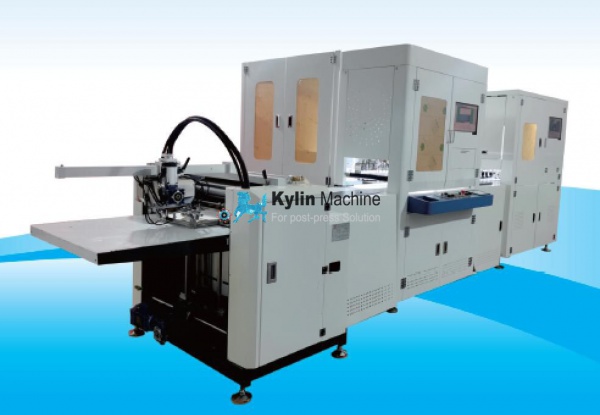
Fully Auto hard cover machine 2022 version
Fully Auto hard cover machine 2022 version

Paper round box making machine 2022 Version
paper round box making machine, not only make the round shape box, but also the irregular shape box with difference shape of molds.
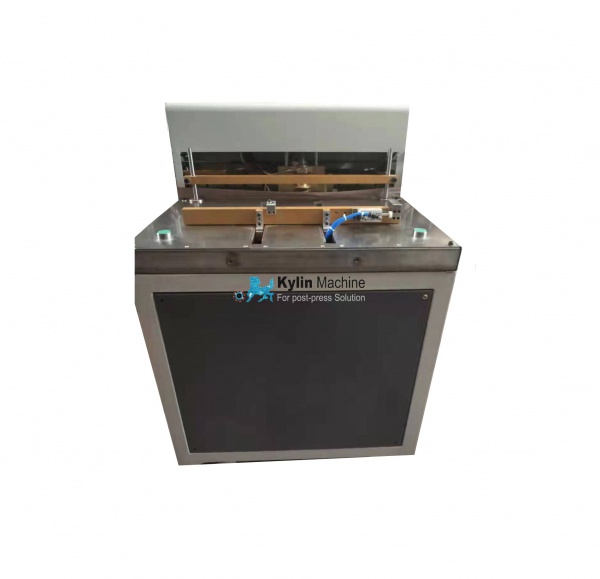
Jewelery box edge gilding machine
Stamp the lines on the jewelry box edge, with 5-8 box feed at one time. your best choice for jewelry box maker
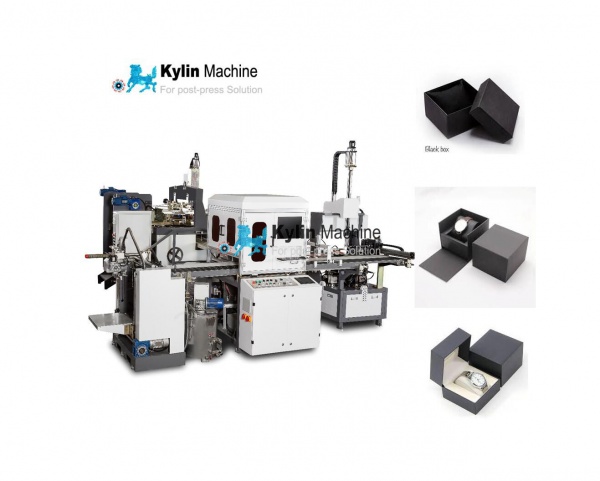
Automatic watch box making machine

Auto hot stamp and thumb cutter
This auto stampingand auto thumb cutter is used to hot foil AFTER the box lid is folded up - finished, and auto cut the thumb of boxes

Robbin machine
Ribbon pasting machine is used high technology to pasting the ribbon on the cover of rigid boxes, jewelry box, luxury package box. auto pasted with double side adhesive tape on the ready ribbon materials, then auto pasting on the cover of box.

Jewellery Box making machine
Jewelry box machine is designed for making high quality box in Curve corner shape, Octagon shape, Square shape box and other special shape withplastic, MDF, cardboard and others materials.
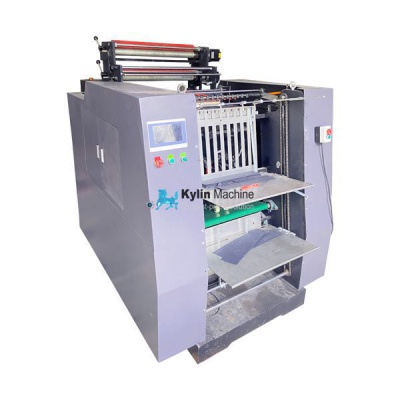
Auto feed die cutting&stamping machine
Auto feeder die cutting&stamping machine, working for 60-3,000gsm paper sheets, cardboards, leather, tissue paper, hard cover, film materials.
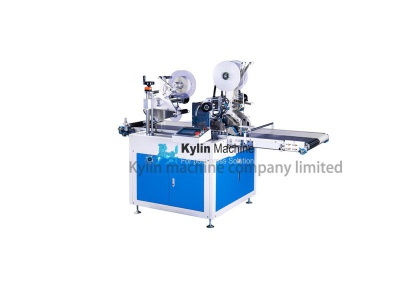
Double-side adhesive tape applicator for foldable box
Double-side adhesive tape applicator for foldable box
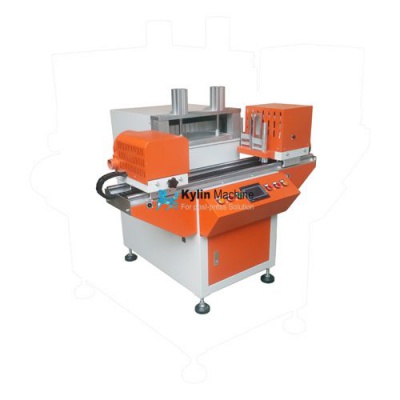
Book edge gilding machine 2021 version
Book edge gilding machine is used for edge gilding of Notebook, Bible book, normal book ,etc, round corner gilding, simple process. esay operated, sanding process and gilding process are all in one machines
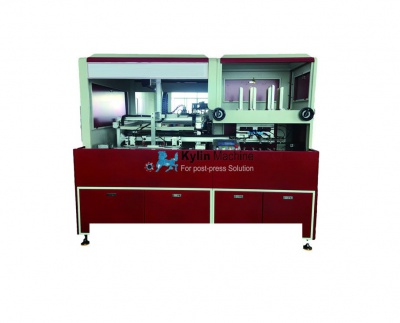
Collapsible boxes machine
The Foldable rigid boxes collapsible gift boxes machine, the box could be foldable while in shipping, save shipping costs and storage costs, it also be called collapsible gift boxes.

Slip Case making machine
We are pleased to introduce our Ky-280 Slipcase making machine. This machine can wrap top piece of the box . It can also make book slip cases. Without sealing the corner of the boards, the board glued with cover can be formed into a slip case with the hi
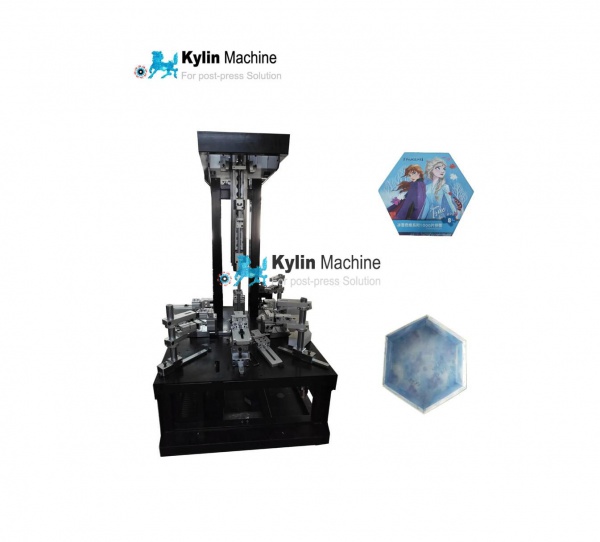
Polygonal box machine
Polygonal rigid box machines, which can customized your rigid boxes business. Triangle shape box, Rectangle shape rigid box, Pentagon shape rigid box, hexagon shape rigid boxes, Octagon shape rigid box, all availabe for making.

Charpie insert machine
Charpie insert machine, foam covered with charpie, no only protect the goods in the boxes, but also decorate the cover of boxes
ADDRESS
haoxin industy, Daojiao town, Dongguan city, China
CONTACT
Ph:+86-13925787347
Mail:admin#iboxmachine.com
点击右上角
分享给朋友吧
NEWSLETTER

