


点击右上角
分享给朋友吧
Is Fujifilm's New High-Speed Jet Press a Blessing or a Curse for Your Workflow?
Author:Kylin machine company
Click:
Time:2025-06-30 09:52:04
Are you excited by new, faster printing speeds? But your finishing line can't keep up. This creates huge bottlenecks and kills your efficiency and profit margins.
Fujifilm's new Jet Press 750S High Speed Model is a huge leap for print productivity, reaching 5,400 B2 sheets per hour. To truly benefit, you must have post-press equipment that can match this speed. Otherwise, you will simply create a production-stopping bottleneck.
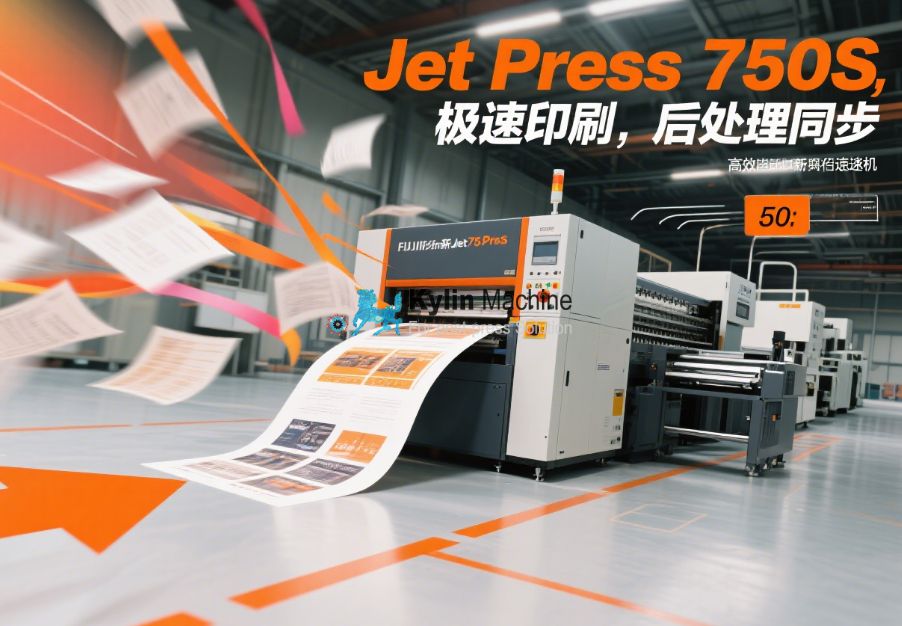
I saw the news about Fujifilm’s upcoming 'Peak Performance Print' online event. As someone who has been in the post-press machinery business for almost two decades, these announcements always grab my attention. It’s not just about the printer. It’s about what happens after the sheet is printed. A new, faster press sends ripples through the entire production line. It forces us all to ask important questions about our own operations. For my customers in the packaging and bookbinding world, this is a critical development. Let's look at what this really means for a business like yours.
What does '5,400 sheets per hour' really mean for your box factory?
That big number sounds amazing on paper. But it could mean piles of printed sheets sitting on your factory floor, waiting for days to be finished. Let's break down the real-world implications.
'5,400 sheets per hour' means your finishing department must process one B2 sheet every 0.67 seconds to keep up. This massive output requires automated, high-speed post-press machinery. Without it, you cannot convert those printed sheets into finished boxes without a crippling backlog.
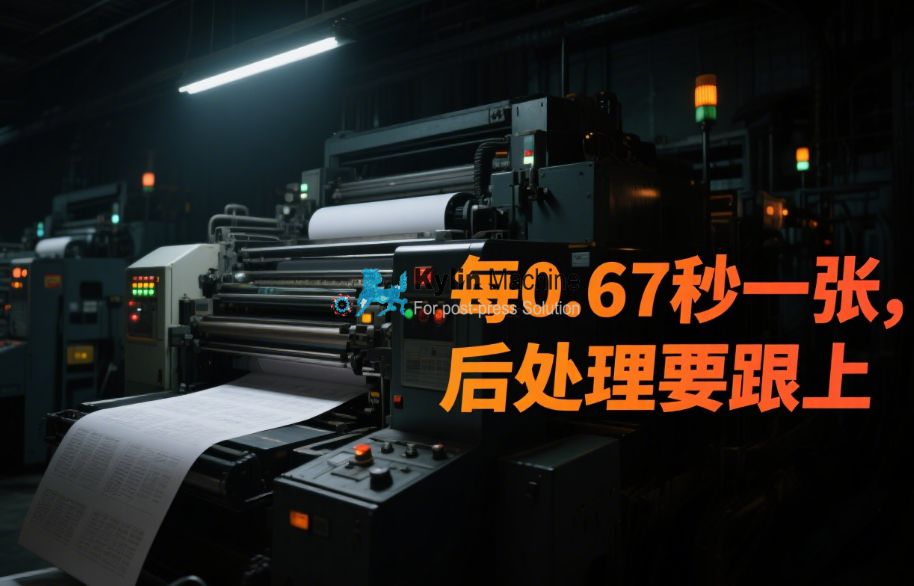
When I see a number like '5,400 sheets per hour,' I immediately do the math. This is a habit I developed at Kylin Machine to help our customers plan their capacity. This new speed from Fujifilm is impressive, but it can also be dangerous if you are not prepared.
The Math of a Bottleneck
Let's look at the numbers. There are 3,600 seconds in an hour. If you divide that by 5,400 sheets, you get about 0.67 seconds per sheet. This means every single step after the printer has less than a second to do its job on that sheet. Your die-cutter, your laminator, and especially your rigid box forming machine or casemaker must match this pace. If they don't, you have a problem. A huge one. I often see factories invest heavily in a new press, only to find their overall output barely increases because the bottleneck just moved downstream.
Let's visualize the gap:
| Production Stage | Traditional Post-Press Speed (sheets/hr) | New Jet Press Output (sheets/hr) | The Speed Gap (sheets/hr) |
|---|---|---|---|
| Printing | 2,500 | 5,400 | N/A |
| Box Wrapping | 1,200 | Must match 5,400 | -4,200 |
| Case Making | 1,500 | Must match 5,400 | -3,900 |
This table shows the reality. The new press is a race car, but your finishing line might be a bicycle. This gap represents lost time, wasted money, and a factory floor clogged with work-in-progress.
Can automation in printing be matched by automation in finishing?
The new Jet Press has a high level of automation. But if your post-press work is still manual or semi-automatic, you lose all those efficiency gains. So how do you fix this?
Yes, printing automation can and must be matched in finishing. Modern post-press solutions like robotic spotters and automated case makers use advanced vision systems and robotics. They handle materials, ensure precision, and maintain high speeds to create a balanced, fully automated production line.
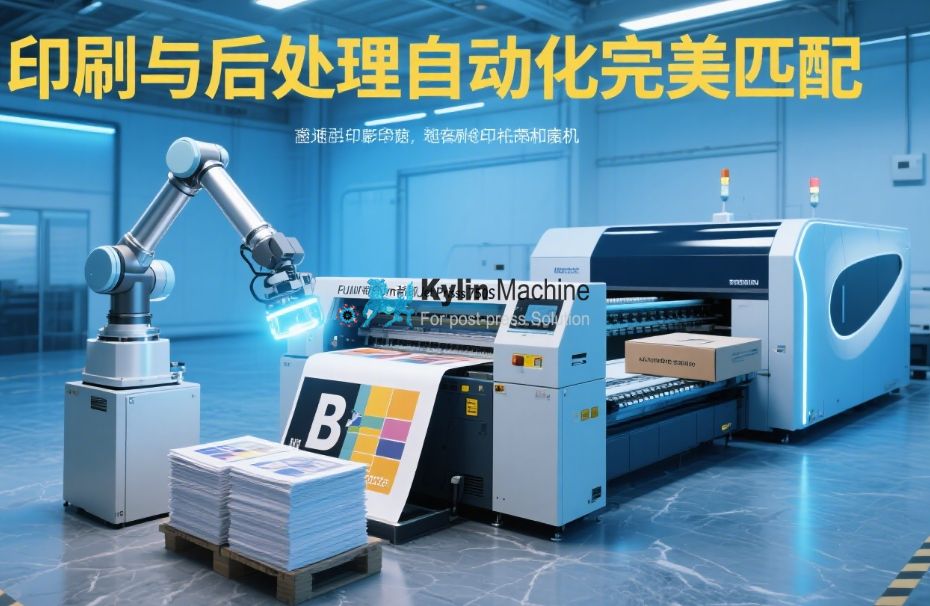
Fujifilm says their new press has features for 'minimal manual intervention.' This is the key to its speed. The machine doesn't need to stop for constant adjustments. Your post-press equipment needs to follow the same principle. At Kylin Machine, this is where we have focused our R&D for years. High speed is useless without high automation.
I remember visiting a customer in Europe a few years ago. They had just bought a brand-new, fast digital press. They were so proud. But when I walked through their factory, the press was idle. I asked why. The manager pointed to the finishing area, where workers were slowly positioning boards by hand for their rigid boxes. Their manual post-press line was so slow, they could only run the new press for three hours a day. They had invested in a Ferrari but had nowhere to drive it. This is why automation in finishing is not a luxury; it is a necessity.
The Role of Robotic Spotters
This is where technology like our Robotic Spotter comes in. Instead of a person manually placing the box wrap or the cover paper, a robotic system does it. It's not just faster; it's more accurate. It can pick, align, and place with incredible precision, every single time, without getting tired. This is how you match a speed of 5,400 sheets per hour.
Why Vision Systems Are Crucial
At these speeds, you cannot stop the line to check for quality. The system must do it automatically. Advanced vision systems use cameras to check the alignment of every single sheet on the fly. If something is wrong, it can be adjusted instantly or the sheet can be rejected without stopping production. This reduces waste and removes the need for a person to stand there and watch, which is critical when a sheet is passing by every 0.67 seconds.
How does this new press affect different packaging types?
You might think this new press is only for commercial printers making flyers. But this technology will heavily impact the high-value packaging industry. This includes rigid boxes and book covers.
This high-speed press directly impacts high-quality packaging. For luxury rigid boxes, it enables much faster production runs. For hardcover books, it allows for high-volume jobs with excellent quality. Both demand equally fast and precise finishing equipment to turn printed sheets into profit.
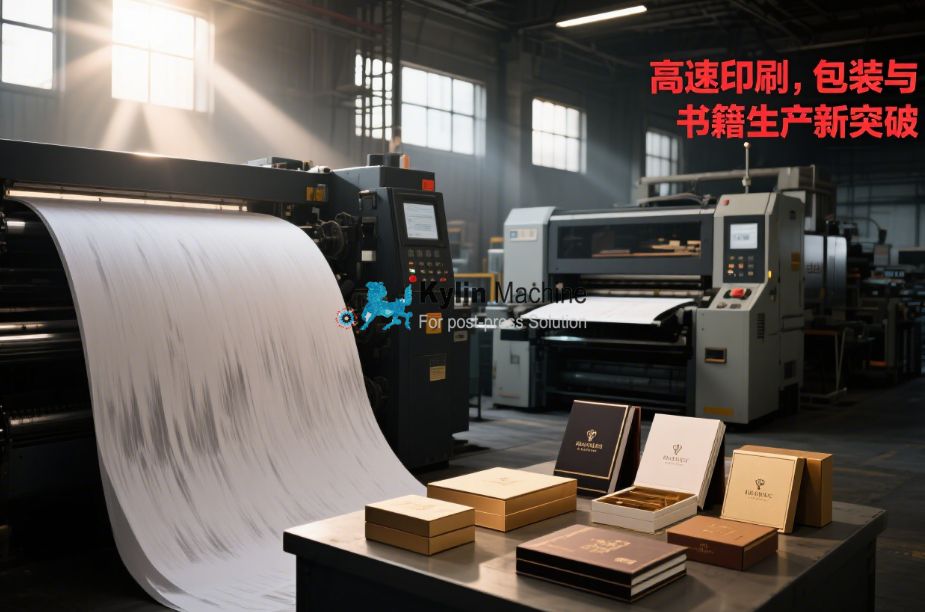
The markets my customers serve—luxury goods, electronics, and publishing—are all demanding faster turnaround times. A brand launching a new phone wants its packaging ready immediately. A publisher printing a bestseller needs books in stores for a specific release date. The Jet Press 750S High Speed Model is a tool to meet these demands. But again, it's only one tool in the toolbox.
Impact on Luxury Rigid Boxes
The world of luxury packaging is all about quality and speed. A fast press allows you to print beautiful, high-graphic wraps for rigid boxes quickly. But a slow box-wrapping or forming machine will stop your entire project. To serve these demanding clients, your workflow must be seamless.
- Printing: 5,400 sheets/hr.
- Laminating/Varnishing: Must keep up.
- Board Cutting: Must be fast and precise.
- Positioning and Wrapping: This is often the biggest bottleneck. An automated line, like the ones we build at Kylin Machine, is designed to match these printing speeds.
Impact on Hardcover Book Production
The bookbindery industry faces similar challenges. A popular book may need millions of copies. A fast press can produce the covers, but a slow casemaker will delay the entire shipment. An integrated line that moves smoothly from printed sheet to finished book cover is essential. Our technology in casemaking is focused on exactly this: high speed, reliable automation, and quick changeovers for different book sizes. This ensures that the investment in a fast press provides a real return.
What is the real cost of ignoring your post-press workflow?
You are focused on the big investment in a new press. But ignoring your finishing line could make that entire investment worthless. Let's think about the hidden costs.
The true cost of an unbalanced line is not just the bottleneck. It includes wasted labor, excess inventory taking up space, missed deadlines with clients, and lost opportunities. You simply cannot accept high-volume, high-profit jobs because you can't deliver them on time.
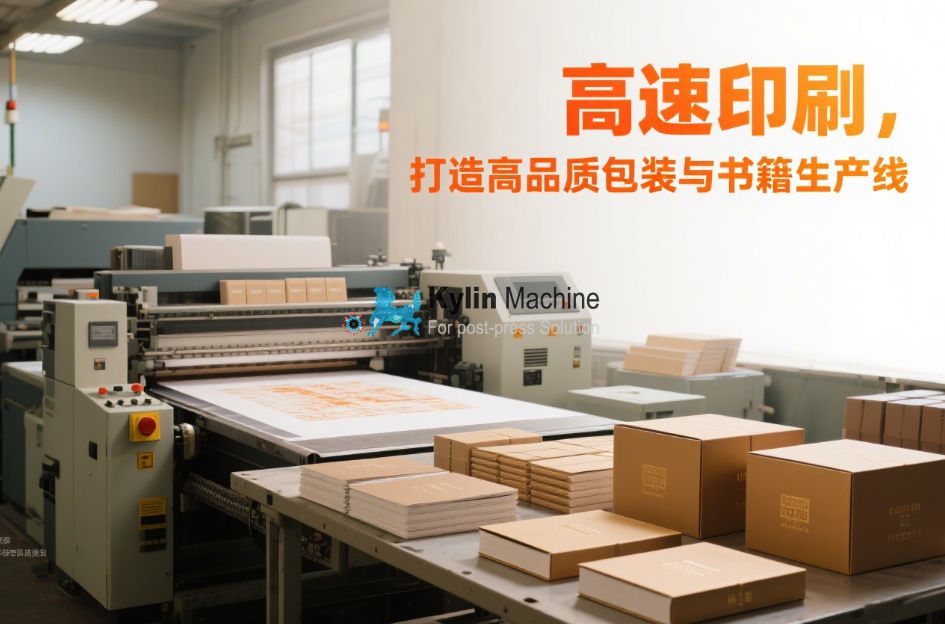
The decision to upgrade your printing technology is a big one. It involves a lot of money. But it is a mistake to look at that cost in isolation. The real goal is to increase the overall profitable output of your factory. If one part of your line is ten times faster than another, you have not built a faster line. You have only built a bigger bottleneck.
The Cost of Idle Machines
That new press costs money every single hour, whether it's running or not. If it sits idle for 50% of the day waiting for the finishing department to catch up, you are paying for a machine you cannot use. This is a direct hit to your return on investment.
The Cost of Missed Opportunities
What happens when a big client comes to you with a rush job for 100,000 rigid boxes? If you have a balanced, high-speed line, you can say 'yes' and win that profitable contract. If your post-press is slow, you have to say 'no.' That client will go to your competitor—one who invested in both printing and finishing. This is the biggest hidden cost of all.
Planning Your Full System Upgrade
My advice is simple. When you consider a new press, you must audit your entire workflow at the same time. Think of it as one system, not separate machines. Talk to experts who understand the whole process. At Kylin Machine, we don't just sell machines. We help our customers design production lines that are balanced, automated, and profitable. We know that our success depends on your success.
Conclusion
Fujifilm's new press is exciting news. But a fast press is only one piece of the puzzle. True growth comes from a balanced, high-speed production line from start to finish.
Recommended article
—

Recommended Products
—
Book index machine
index paper die cutting machine is a special equipment for paper angle cutting in the printing industry
Mini handheld hot glue machine

Layflat board book binding machine
Children’s Board Book Production with PVA Pattern Gluing machine, kid puzzle board book glue binding machine. Animated Children’s Books, Interactive Books.

Rigid collapsible box machine
collapsible box side wing forming machine is a new type of equipment that is economical, practical, and widely used in the manufacturing of gift boxes, primarily for the folding and wrapping of the side panels of the boxes
Perfume box making machine
perfume box forming machine adopts a fully disassembled action mode to achieve the automatic forming of perfume box, drawer boxes, slipcase, wine box, etc.

2023 Hard cover book pressing and creasing machine
Hard cover book pressing and creasing machine is a piece of equipment used in the bookbinding process to create professional-looking hardcover books
Small head tail band machine
A head tail band machine is a semi-automatic machine that is used to apply head and tail bands to hardcover books. Head and tail bands are decorative strips of cloth or paper that are applied to the top and bottom of the spine of a book. They help to protect the spine and give the book a more finished look.
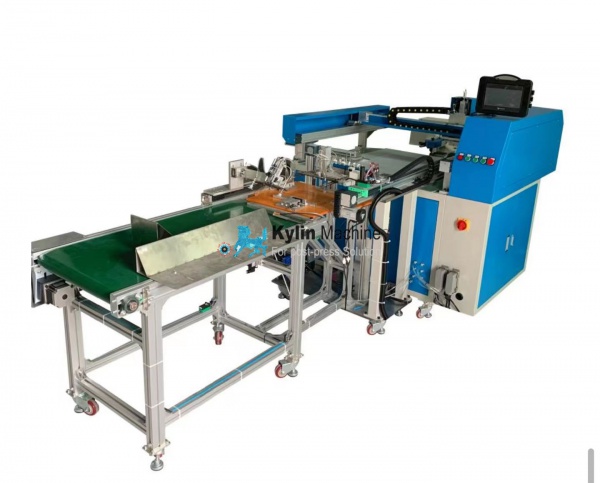
Auto notebook cover making machine Ky-1700
Auto notebook cover machine is used for leather products, including notebook, diary, shoes, bags, gift boxes, jewelry boxes, and ipad/phone cases
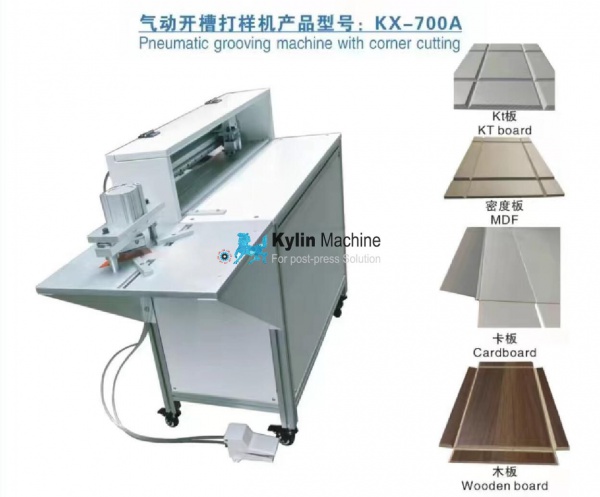
Manual groove machine with corner cutter
A manual groove machine with corner cutter is a device used in paper and cardboard processing to create grooves and corners on sheets of paper or cardboard
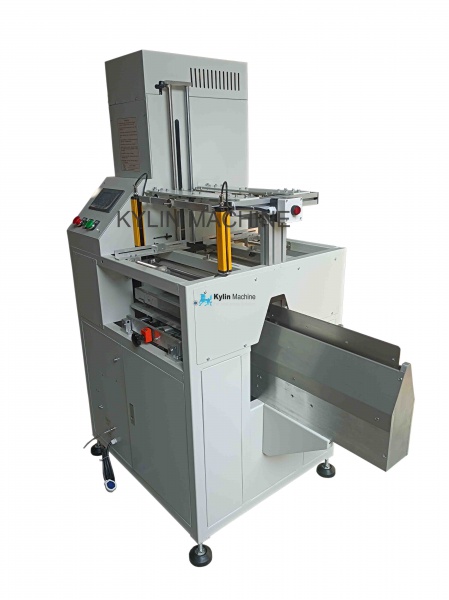
Book casing machine 2023
The equipment can be operated by one to two people. The operator only needs to place the book core and cover
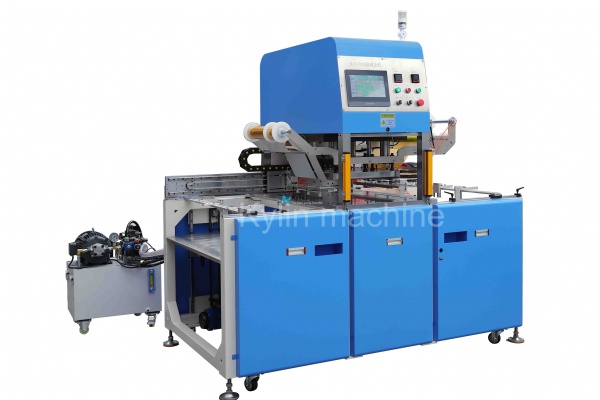
Auto Hydraulic Force Stamping machine
Max Stamp size: 550X450mm Stamping precision: ±0.1mm Pressure power: 10T Overlay the stamped logo
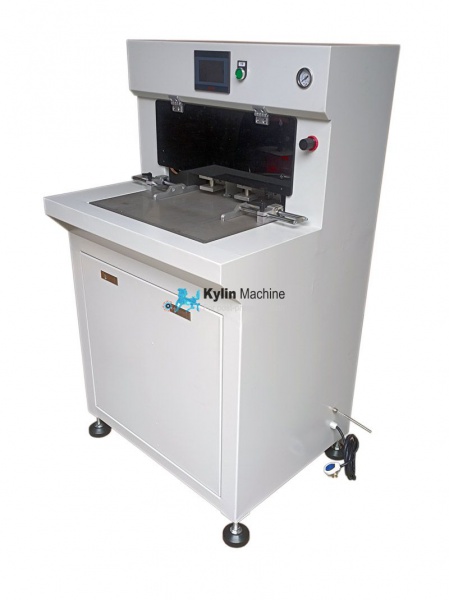
Hardcover rounding machine
Bookcase cover rounding machine press the produced corner bookcase into rounded corners without cutting the material directly install the bookcase, and press the right-angle edge material into the bookcase cover
Recommended Machines
—
Book index machine
index paper die cutting machine is a special equipment for paper angle cutting in the printing industry
Mini handheld hot glue machine
Layflat board book binding machine
Children’s Board Book Production with PVA Pattern Gluing machine, kid puzzle board book glue binding machine. Animated Children’s Books, Interactive Books.
Rigid collapsible box machine
collapsible box side wing forming machine is a new type of equipment that is economical, practical, and widely used in the manufacturing of gift boxes, primarily for the folding and wrapping of the side panels of the boxes
Perfume box making machine
perfume box forming machine adopts a fully disassembled action mode to achieve the automatic forming of perfume box, drawer boxes, slipcase, wine box, etc.
2023 Hard cover book pressing and creasing machine
Hard cover book pressing and creasing machine is a piece of equipment used in the bookbinding process to create professional-looking hardcover books
Small head tail band machine
A head tail band machine is a semi-automatic machine that is used to apply head and tail bands to hardcover books. Head and tail bands are decorative strips of cloth or paper that are applied to the top and bottom of the spine of a book. They help to protect the spine and give the book a more finished look.
Auto notebook cover making machine Ky-1700
Auto notebook cover machine is used for leather products, including notebook, diary, shoes, bags, gift boxes, jewelry boxes, and ipad/phone cases
Manual groove machine with corner cutter
A manual groove machine with corner cutter is a device used in paper and cardboard processing to create grooves and corners on sheets of paper or cardboard
Book casing machine 2023
The equipment can be operated by one to two people. The operator only needs to place the book core and cover
Auto Hydraulic Force Stamping machine
Max Stamp size: 550X450mm Stamping precision: ±0.1mm Pressure power: 10T Overlay the stamped logo
Hardcover rounding machine
Bookcase cover rounding machine press the produced corner bookcase into rounded corners without cutting the material directly install the bookcase, and press the right-angle edge material into the bookcase cover

2022 verion of rigid box machine
it is the most advance machinery for making phone box, tea box, sweet box, shoe box, jewelry box, moon cake box, ect

Glue spray machine
A glue spray machine is a device that is used to apply a thin, even layer of adhesive to a surface. This type of machine is commonly used in the packaging and printing industries to help secure boxes, labels, and other items in place. With its precision spray nozzle, a glue spray machine can quickly and easily apply glue to a variety of materials, including cardboard, paper, and plastic. This can help businesses save time and improve the efficiency of their packaging processes.

Cardboard slitting machine
Cardboard cutting machine is good at cutting bookboards, cardboard paper board. Simple Operation, flexible adjustment, high accuracy and efficiency

Book spine rounding and backing machine
Put the glued book block in the working table, place the book with its back facing in and parallel to the top of the table or slightly beyond the top. After several reciprocating movements of the round series, turn the book block over and re-Repeat the above operation method to make the back of the book form a complete arc
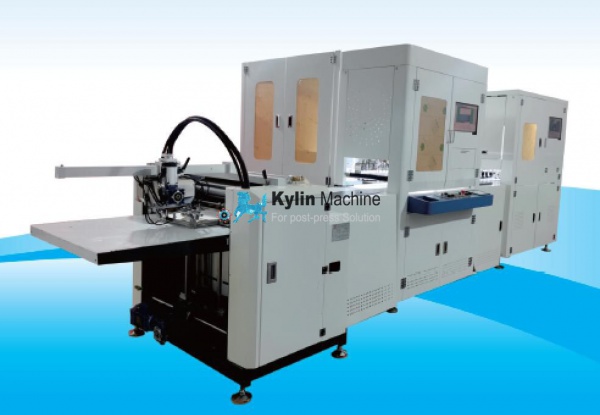
Fully Auto hard cover machine 2022 version
Fully Auto hard cover machine 2022 version

Paper round box making machine 2022 Version
paper round box making machine, not only make the round shape box, but also the irregular shape box with difference shape of molds.
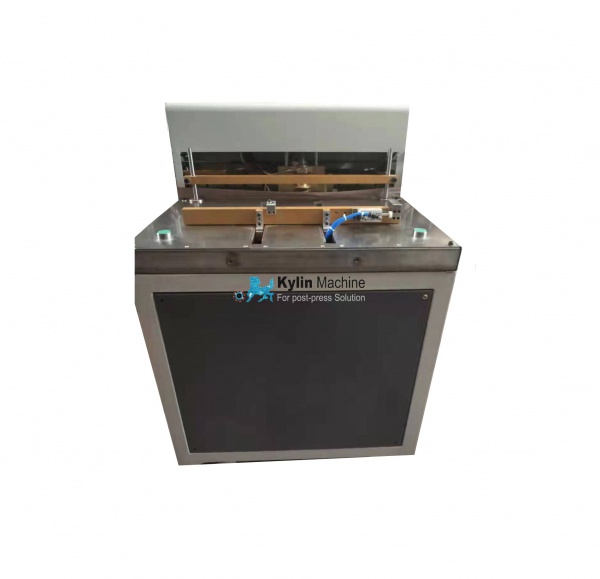
Jewelery box edge gilding machine
Stamp the lines on the jewelry box edge, with 5-8 box feed at one time. your best choice for jewelry box maker
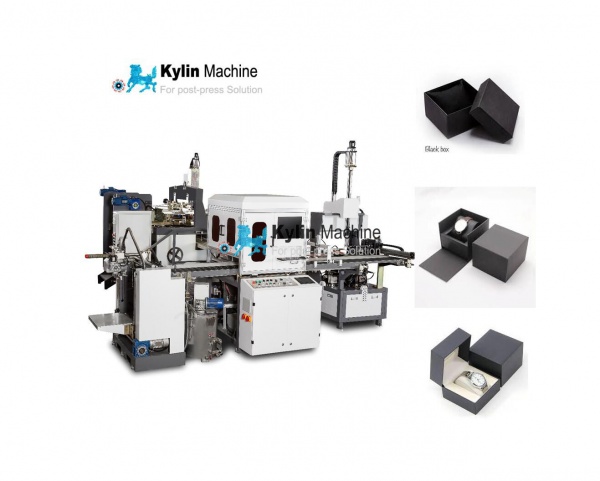
Automatic watch box making machine

Auto hot stamp and thumb cutter
This auto stampingand auto thumb cutter is used to hot foil AFTER the box lid is folded up - finished, and auto cut the thumb of boxes

Robbin machine
Ribbon pasting machine is used high technology to pasting the ribbon on the cover of rigid boxes, jewelry box, luxury package box. auto pasted with double side adhesive tape on the ready ribbon materials, then auto pasting on the cover of box.

Jewellery Box making machine
Jewelry box machine is designed for making high quality box in Curve corner shape, Octagon shape, Square shape box and other special shape withplastic, MDF, cardboard and others materials.
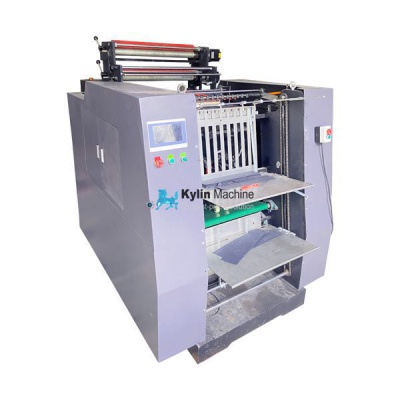
Auto feed die cutting&stamping machine
Auto feeder die cutting&stamping machine, working for 60-3,000gsm paper sheets, cardboards, leather, tissue paper, hard cover, film materials.
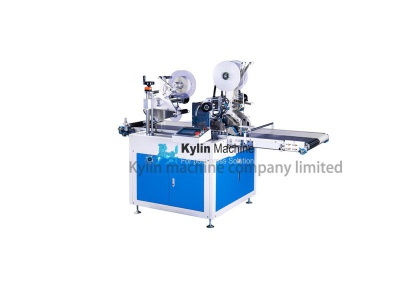
Double-side adhesive tape applicator for foldable box
Double-side adhesive tape applicator for foldable box
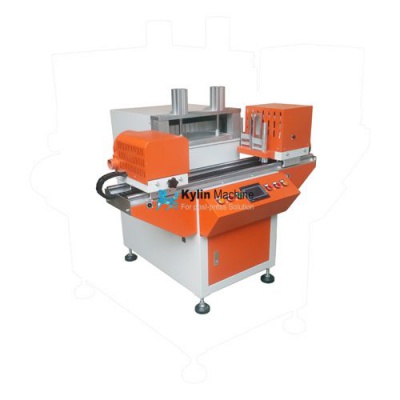
Book edge gilding machine 2021 version
Book edge gilding machine is used for edge gilding of Notebook, Bible book, normal book ,etc, round corner gilding, simple process. esay operated, sanding process and gilding process are all in one machines
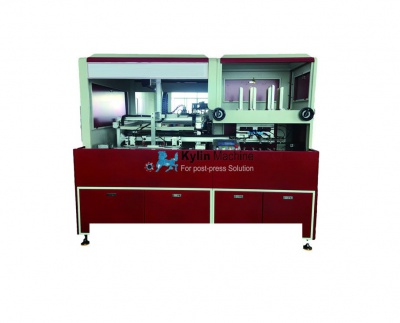
Collapsible boxes machine
The Foldable rigid boxes collapsible gift boxes machine, the box could be foldable while in shipping, save shipping costs and storage costs, it also be called collapsible gift boxes.

Slip Case making machine
We are pleased to introduce our Ky-280 Slipcase making machine. This machine can wrap top piece of the box . It can also make book slip cases. Without sealing the corner of the boards, the board glued with cover can be formed into a slip case with the hi
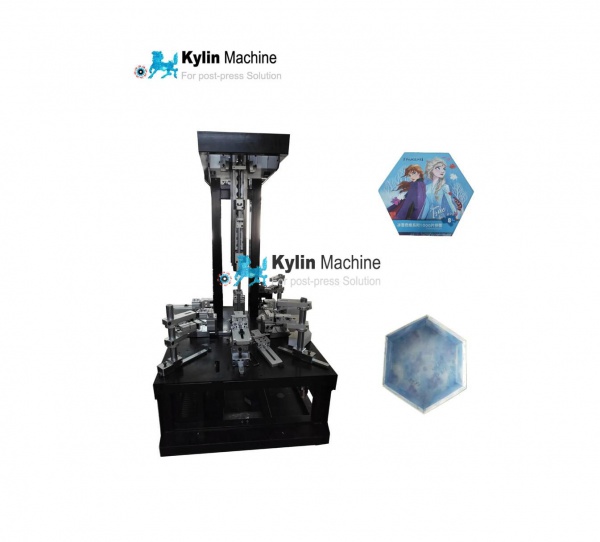
Polygonal box machine
Polygonal rigid box machines, which can customized your rigid boxes business. Triangle shape box, Rectangle shape rigid box, Pentagon shape rigid box, hexagon shape rigid boxes, Octagon shape rigid box, all availabe for making.

Charpie insert machine
Charpie insert machine, foam covered with charpie, no only protect the goods in the boxes, but also decorate the cover of boxes
ADDRESS
haoxin industy, Daojiao town, Dongguan city, China
CONTACT
Ph:+86-13925787347
Mail:admin#iboxmachine.com
点击右上角
分享给朋友吧
NEWSLETTER

